You must have one of these extentions in you browser

AdBlock, AdBlock Plus, uBlock Origin or others
  1. Go to your browser extentions and click the Ad blocker icon
  2. Select pause on this site, don't run on pages on this site, or some other similar option.
  3. Now you can refresh the page

Nature Reviews Bioengineering

SJR 2024

7.993 Q1

H-Index

27

Publication type

Journals

ISSN

27316092

Coverage

2023-2025

Scope

Nature Reviews Bioengineering is an online-only journal publishing authoritative, accessible and agenda-setting Reviews, Perspectives and Comments covering the full breadth of bioengineering, focusing on application, translation and technology, that is, leveraging biological knowledge to engineer solutions for real-world applications. Nature Reviews Bioengineering aims to bring together scientists and engineers interested in the design of materials, tools, methods, technologies or devices to mimic, modify or control biology, to understand biological mechanisms, combat disease or address environmental issues; clinicians leveraging research outputs in bioengineering to improve human health; and readers interested in product development, technology transfer and translation. The journal also aims to highlight bioengineering approaches in the United Nations Sustainable Development Goals (SDGs) framework, in particular, good health and well-being, zero hunger, gender equality, reduced inequalities, responsible consumption and production, and climate action. In addition, we seek to amplify diverse voices, provide a platform for discussion, debate and solution, and publish pieces that discuss commercial, ethical, legal and societal aspects of bioengineering research, and the translation of bioengineering advances in low-resource settings. We are interested in all areas of bioengineering, including the work of scientists in academia and industry.

Quartiles

The set of journals have been ranked according to their SJR and divided into four equal groups, four quartiles. Q1 (green) comprises the quarter of the journals with the highest values, Q2 (yellow) the second highest values, Q3 (orange) the third highest values and Q4 (red) the lowest values.

CategoryYearQuartile
Applied Microbiology and Biotechnology2024Q1
Biomedical Engineering2024Q1
Biophysics2024Q1
SJR

The SJR is a size-independent prestige indicator that ranks journals by their 'average prestige per article'. It is based on the idea that 'all citations are not created equal'. SJR is a measure of scientific influence of journals that accounts for both the number of citations received by a journal and the importance or prestige of the journals where such citations come from It measures the scientific influence of the average article in a journal, it expresses how central to the global scientific discussion an average article of the journal is.

YearSJR
20247.993
Total Documents

Evolution of the number of published documents. All types of documents are considered, including citable and non citable documents.

YearDocuments
202378
202486
External Cites per Doc 
Cites per Doc

Evolution of the number of total citation per document and external citation per document (i.e. journal self-citations removed) received by a journal's published documents during the three previous years. External citations are calculated by subtracting the number of self-citations from the total number of citations received by the journal’s documents.

CitesYearValue
External Cites per document20230
External Cites per document202418.987
Cites per document20230.000
Cites per document202419.231
% International Collaboration

International Collaboration accounts for the articles that have been produced by researchers from several countries. The chart shows the ratio of a journal's documents signed by researchers from more than one country; that is including more than one country address.

YearInternational Collaboration
202333.33
202430.23
Cited documents 
Uncited documents

Ratio of a journal's items, grouped in three years windows, that have been cited at least once vs. those not cited during the following year.

DocumentsYearValue
Uncited documents20230
Uncited documents202427
Cited documents20230
Cited documents202451
% Female Authors

Evolution of the percentage of female authors.

YearFemale Percent
202338.64
202432.46
Estimated APC

It estimates the article processing charges (APCs) a journal might charge, based on its visibility, prestige, and impact as measured by the SJR. It does not reflect the actual APC, but rather a calculated approximation based on journal quality.

YearEst. APC (USD)
2023
20244884
Estimated financial value

It represents the potential financial worth of a journal. It is obtained by multiplying the journal's Estimated APC by the total number of citable documents published over the past five years. This value reflects the hypothetical revenue a journal could generate based on its estimated publication costs and scholarly output.

YearEst. value (USD)
2023
2024420047
Total Cites 
Self-Cites

Evolution of the total number of citations and journal's self-citations received by a journal's published documents during the three previous years.
Journal Self-citation is defined as the number of citation from a journal citing article to articles published by the same journal.

CitesYearValue
Self Cites20230
Self Cites202419
Total Cites20230
Total Cites20241500
Citations per document

This indicator counts the number of citations received by documents from a journal and divides them by the total number of documents published in that journal. The chart shows the evolution of the average number of times documents published in a journal in the past two, three and four years have been cited in the current year. The two years line is equivalent to journal impact factor ™ (Thomson Reuters) metric.

Cites per documentYearValue
Cites / Doc. (4 years)20230.000
Cites / Doc. (4 years)202419.231
Cites / Doc. (3 years)20230.000
Cites / Doc. (3 years)202419.231
Cites / Doc. (2 years)20230.000
Cites / Doc. (2 years)202419.231
Citable documents 
Non-citable documents

Not every article in a journal is considered primary research and therefore "citable", this chart shows the ratio of a journal's articles including substantial research (research articles, conference papers and reviews) in three year windows vs. those documents other than research articles, reviews and conference papers.

DocumentsYearValue
Non-citable documents20230
Non-citable documents202429
Citable documents20230
Citable documents202449
Documents cited by public policy (Overton)

Evolution of the number of documents cited by public policy documents according to Overton database.

DocumentsYearValue
Overton20233
Overton20240
Documents related to SDGs (UN)

Evolution of the number of documents related to Sustainable Development Goals defined by United Nations. Available from 2018 onwards.

DocumentsYearValue
SDG20230
SDG202417
Scimago Journal & Country Rank
Show this widget in your own website

Just copy the code below and paste within your html code: "SCImago" size="25" />
SCImago graphica SCImago Graphica

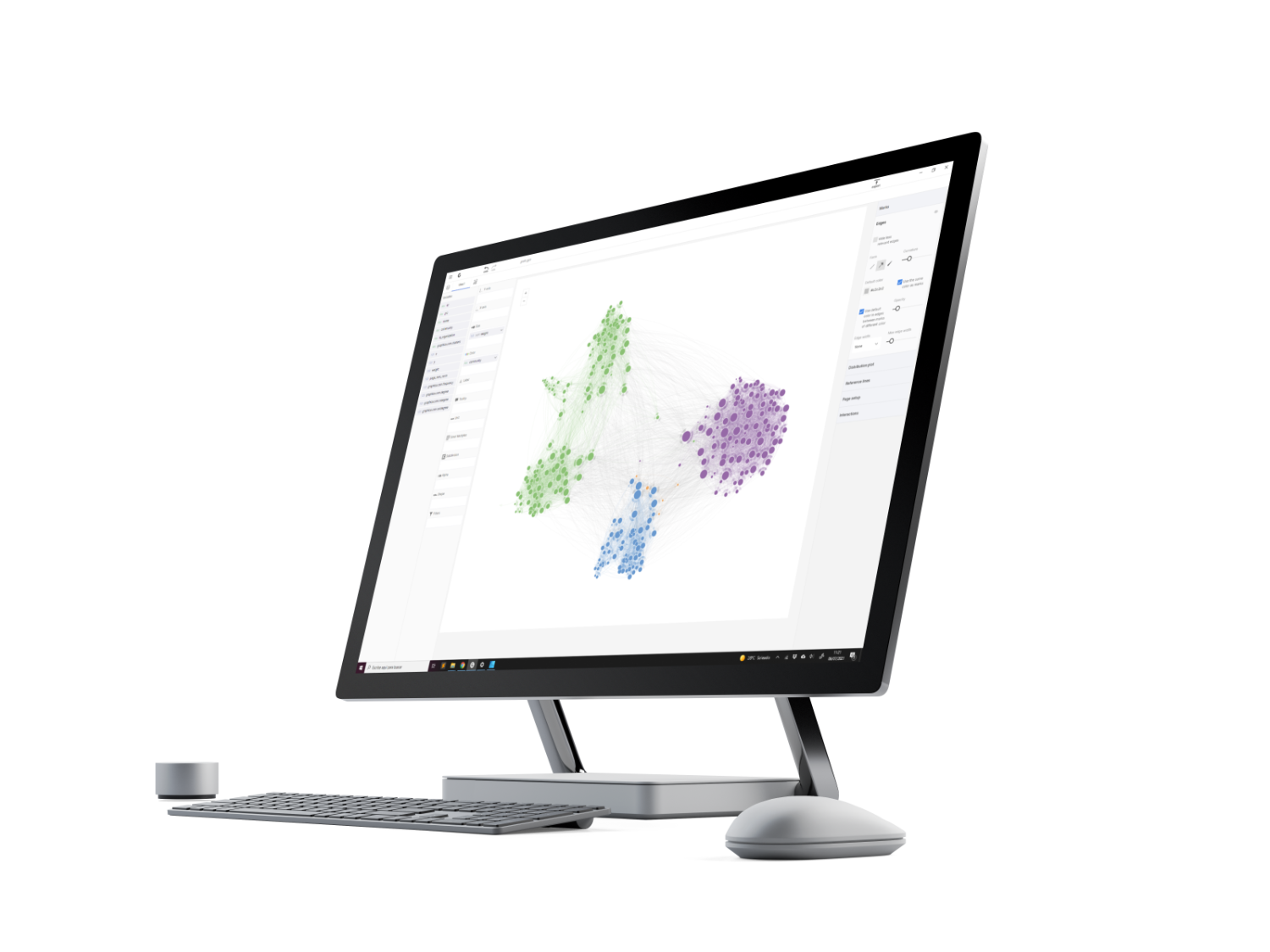
Explore, visually communicate and make sense of data with our new data visualization tool.
Loading comments…

* Required

* Required

* Required

* Required

The users of Scimago Journal & Country Rank have the possibility to dialogue through comments linked to a specific journal. The purpose is to have a forum in which general doubts about the processes of publication in the journal, experiences and other issues derived from the publication of papers are resolved. For topics on particular articles, maintain the dialogue through the usual channels with your editor.

Powered by:
Scopus®
© 2025 SCImago Journal & Country Rank